working papers
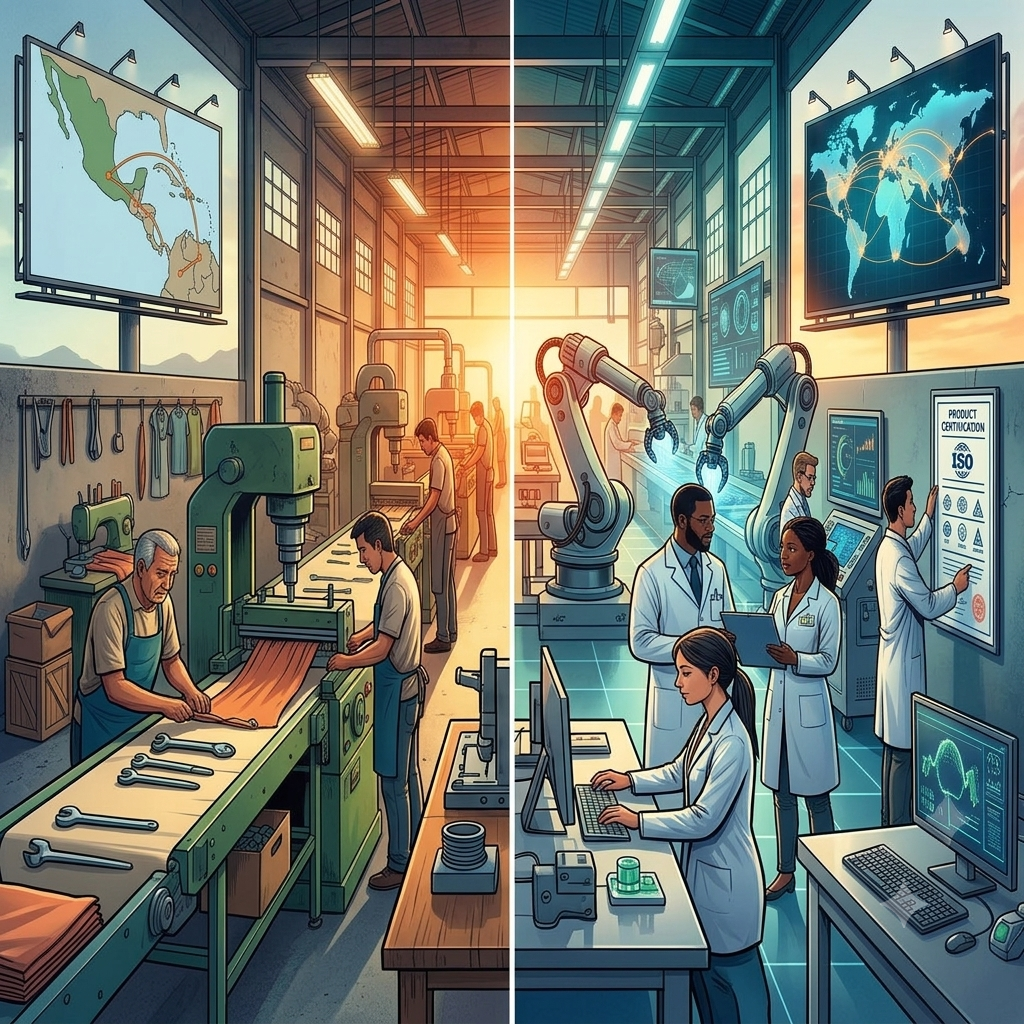
Immigration and Firm-level Upgrading as Exports Boosters in Developing Countries - 2025
The influx of skilled labor from the Venezuelan exodus enabled Colombian manufacturing firms to upgrade capabilities and increase R&D, improving production and organizational processes and boosting trade performance.
With Carlo Lombardo
CESifo Working Paper
We examine firm-level upgrading in Colombian manufacturing firms as a result of a high-skilled
labor supply shock triggered by the Venezuelan exodus. Using a unique and confidential dataset
from 2013 to 2019 and a shift-share instrumental variables approach, we find that the increased
supply of skilled workers primarily drove high-skill hires, especially in R&D divisions. This skill
upgrading process boosted investments in R&D activities. Improved access to higher-quality
inputs led to better production and organizational processes, product enhancements, and an
increased likelihood of obtaining quality certifications, which serve as a straightforward objective
measure of firm-level upgrading. Collectively, these changes were crucial for firms to increase
their exports at both the extensive and intensive margins. This effect was driven by a rise in
differentiated product exports, allowing firms to enter new and more sophisticated markets,
particularly in high- and upper-middle-income countries.

Overlapping Calendars: Colonial Legacies and the Consequences of Misaligned Timing Institutions - 2026
Misalignment between inherited timing institutions and local economic conditions reduces human capital accumulation and hinders economic development.
With Juan Muñoz-Moralesand Abu Shonchoy
Working Paper
This paper studies the economic consequences of conflicts between timing institutions, the rules that govern when schooling, work, and other activities take place, and local economic conditions. We focus on the overlap between school calendars and local agricultural cycles, and document systematic misalignment between the two across countries in southern latitudes. These patterns reflect institutional legacies, as inherited institutions continue to shape the design of school calendars in previously colonized countries. Exploiting this colonial variation as an instrument, our cross-country estimates indicate that greater overlap between school terms and agricultural labor demand increases school dropout rates. To identify the underlying mechanism, we use school-level data to study a calendar reform in Colombia that exogenously increased overlap in two departments. Using a synthetic difference-in-differences approach, we find that calendar misalignment induces a trade-off between schooling and labor, resulting in higher dropout and lower enrollment in rural areas. Our findings highlight the importance of timing institutions as a determinant of human capital accumulation and suggest that aligning social institutions with local economic conditions can generate substantial gains for economic development.